Trees for Guilderland: deciduous
non-street trees
|
Mature Height to 30’
|
| Scientific name |
Common Name |
Height |
Image |
Tolerances |
Wildlife |
Notes/Cultivars |
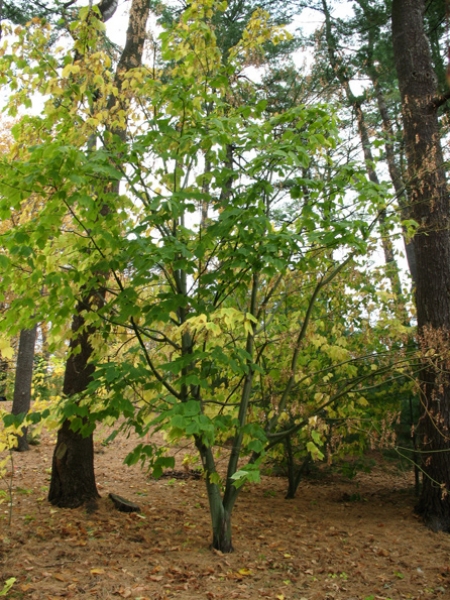
Acer pensylvanicum
|
Striped Maple, Moosewood
|
15 -30'
arching branches
|
|
requires part to
full shade |
Pollinators (P),
Small Mammals (M),
Birds (B),
297 species of
Butterflies
and Moths (L) |
striped white and
green bark on younger plants |
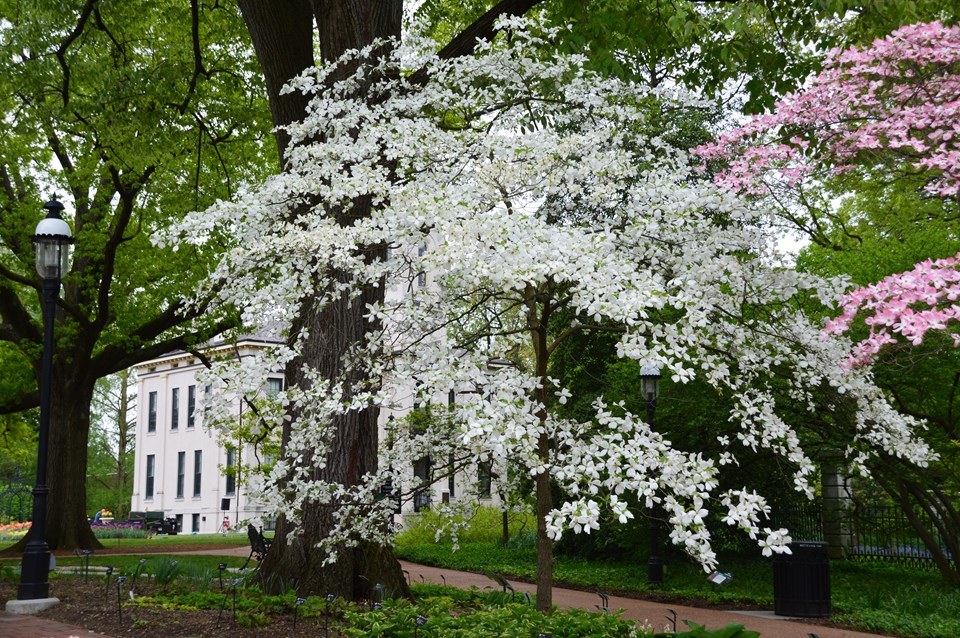
| Cornus florida |
Flowering Dogwood |
20’ - 30’
spreading branches |
|
light filtered shade is
best,
extreme pest and disease issues
|
P, M, B, L (118 species)
|
many cultivars
requires acid soil
transplant B & B or from container
|
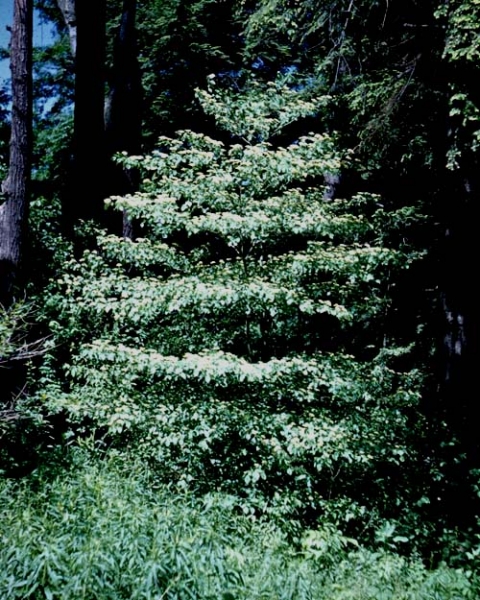
Cornus alternifolia
|
Pagoda Dogwood
|
15' - 25'
spreading shrub
|
|
best in part to
full shade, prefers moist sites
|
P, M, B, L (118 species)
|
some cultivars,
including variegated
|
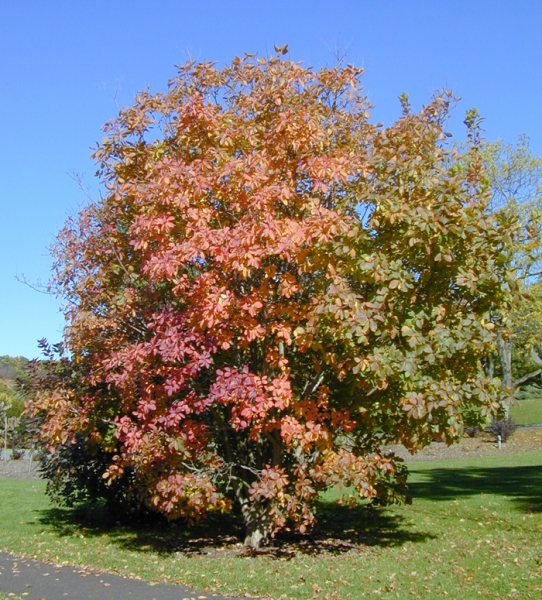
| Continus obovatus |
American Smoketree |
20' - 30'
oval/rounded shrub
|
|
|
|
superior fall colour
pruning for size control ok
weak wood
transplanting
difficult
|
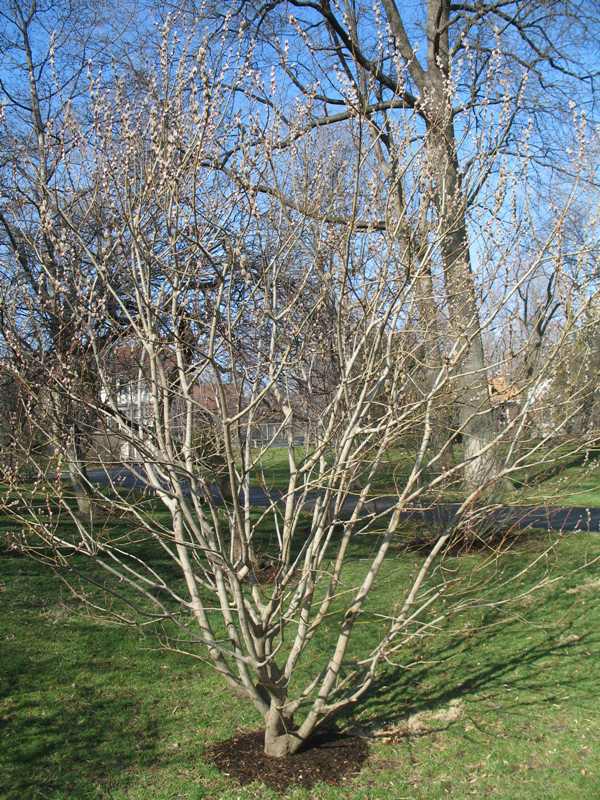
Salix discolor
|
Pussy Willow
|
6-15'
shrub, rounded
|
|
many insect and disease
problems |
P, M, B, L (455 species)
|
for damp sites
short-lived
|
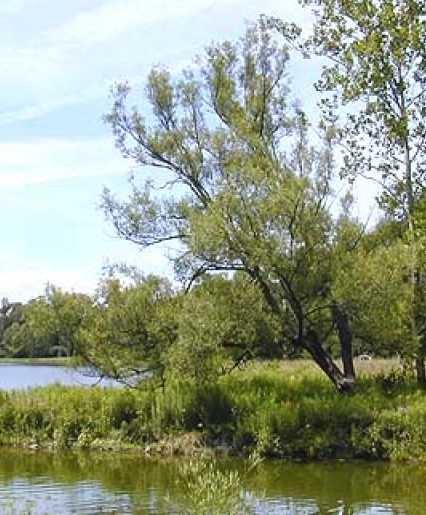
| Salix nigra |
Black Willow |
50’
broad, irregular oval |
|
many insect and disease
problems
|
P, M, B, L (455 species)
|
for damp sites |
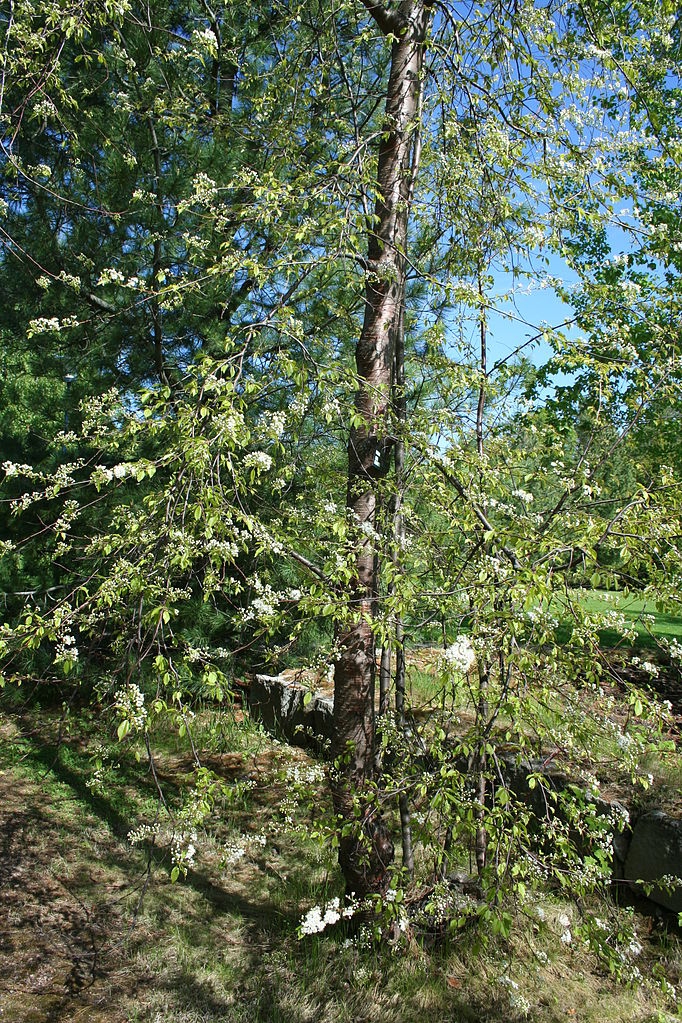
Prunus pensylvanica
|
Pin or Bird Cherry
|
30’-40'
slender
|
|
intolerant of shade
|
high-value
wildlife tree, especially for birds |
fast growing
short-lived (20-40 years)
fruit pits are poisonous
|
| Mature Height 30’ to 60’ |
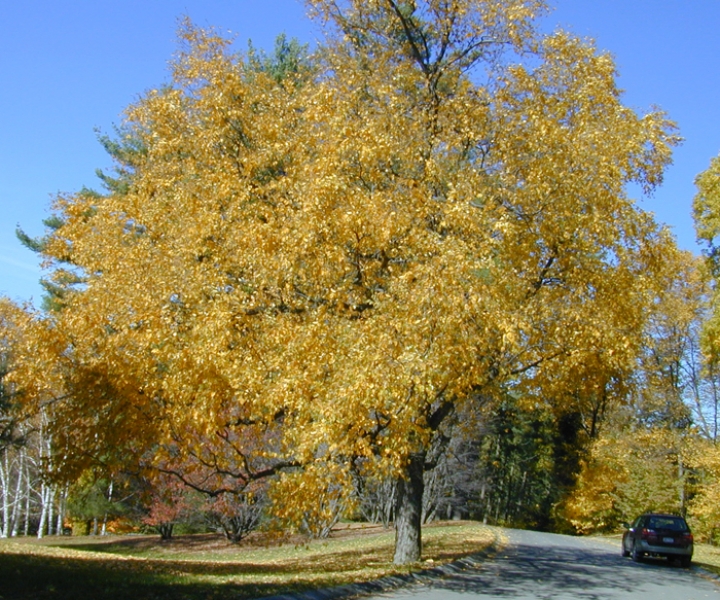
| Betula lenta |
Sweet/Black Birch |
40' - 70'
pyramidal
|
|
prefers moist soil |
P, M, B, L (411 species)
|
bare root transplanting
moderately difficult
|
Betula
alleghaniensis
(Betula lutea)
|
Yellow Birch
|
60’-75’
pyramidal/dense irregular at maturity
|
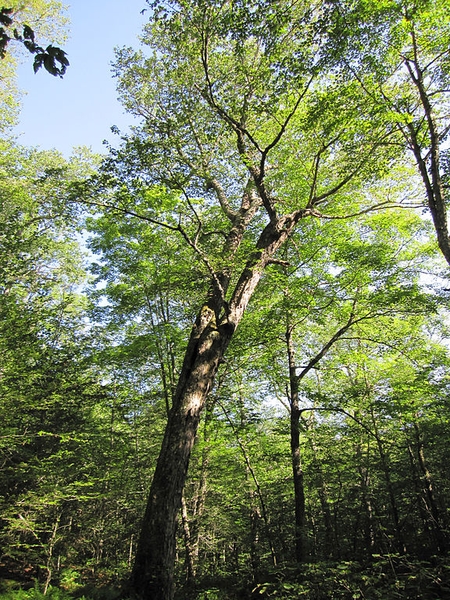
|
not heat tolerant
|
P, M, B, L (411 species)
|
a forest tree
nursery sources scarce
|
| Betula nigra |
River Birch |
40’- 70’
pyramidal-oval to rounded |
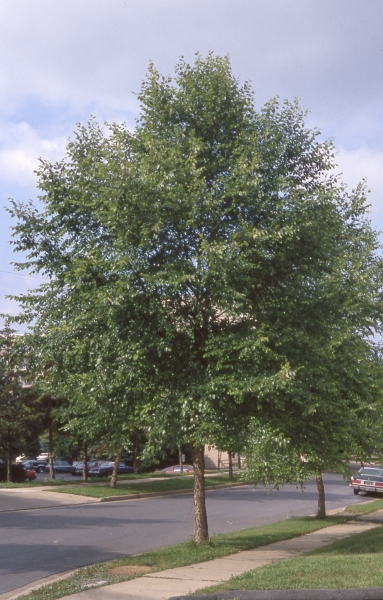
|
tolerates salty soil
|
P, M, B, L (411 species)
|
one smaller cultivar
medium to fast growing, best in moist acid soil
|
Betula papyrifera
|
Paper Birch
|
50’- 70’
pyramidal to oval/rounded
|
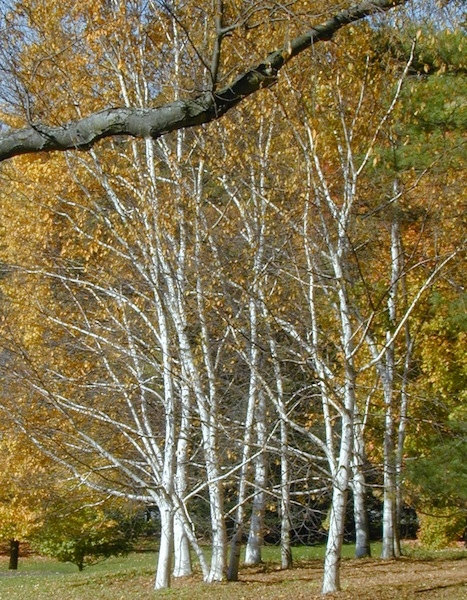
|
susceptible to bronze
birch borer
not drought tolerant
|
P, M, B, L (411 species)
|
several cultivars
bare root
transplanting
moderately difficult |
| Betula populifolia |
Gray Birch |
20' - 40'
open
usually multi-stem
|
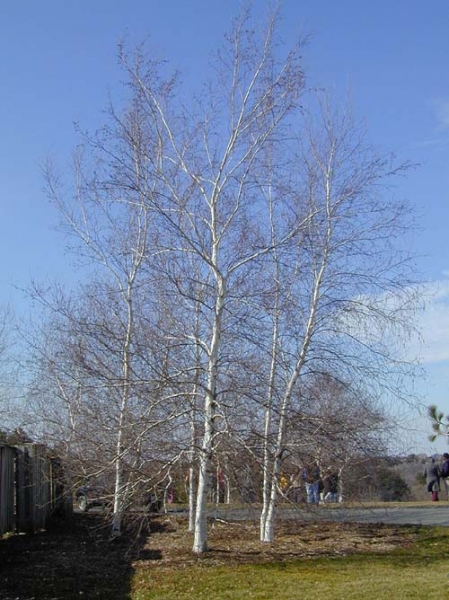
|
|
P, M, B, L (411 species)
|
adaptable to variety of soils
short-lived
bare root transplanting
moderately difficult
|
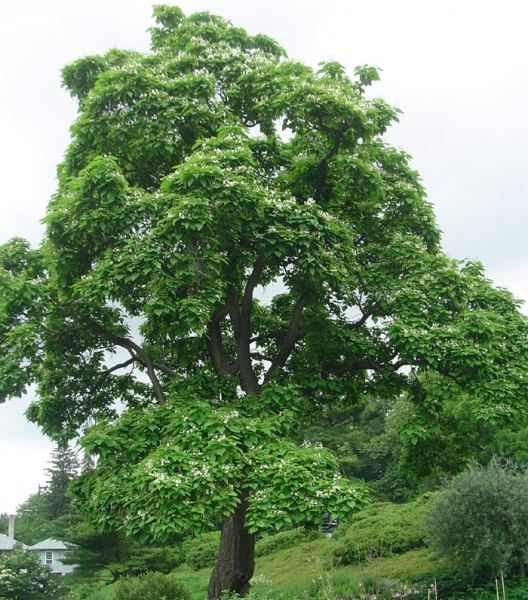
Catalpa speciosa
|
Northern Catalpa
|
40' - 60'
open, oval crown
|
|
|
|
fast growth in
moist site |
| Prunus
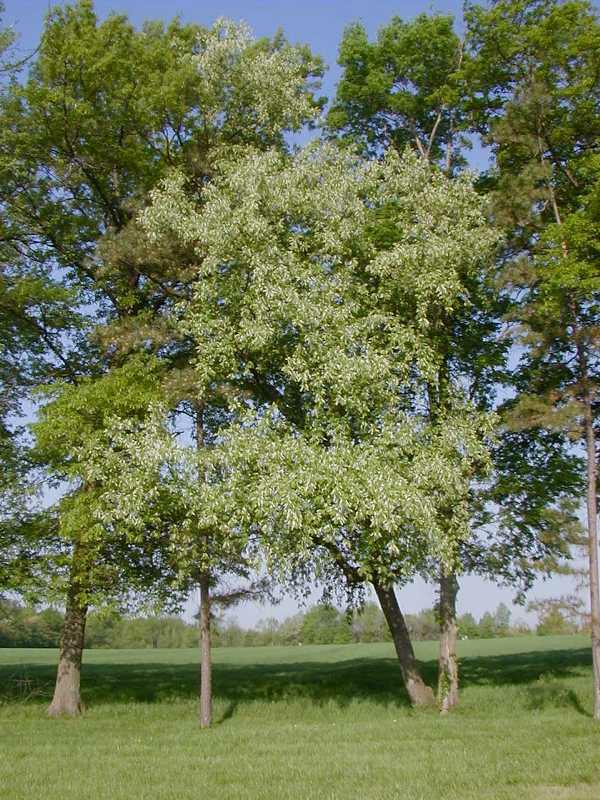
serotina |
Black Cherry |
50’- 60’
pyramidal to oval |
|
|
fruit attractive
to birds |
profuse spring bloom, good fall colour
wood is brittle
prefers deep, fertile soils
long tap root
|
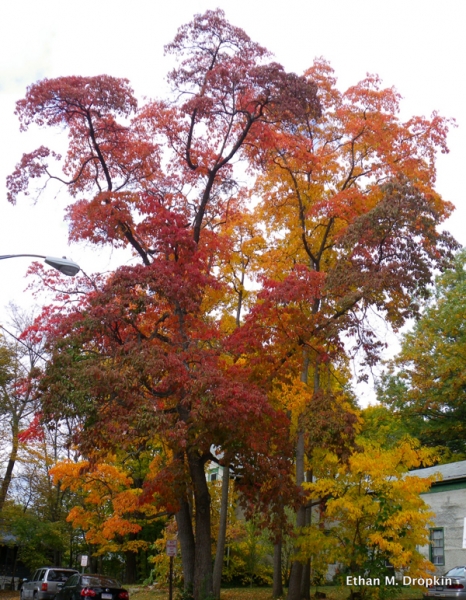
Sassafras albidum
|
Sassafras
|
30' - 60'
pyramidal
|
|
|
P, M, B, L (38 species)
|
brilliant yellow, orange, red fall
color
tap root, very
difficult to transplant; transplant as young plants from
container or B&B in early spring |
| Mature Height Over 60’ |
| Scientific name |
Common Name |
Height |
Image |
Tolerances |
Wildlife |
Notes/Cultivars |
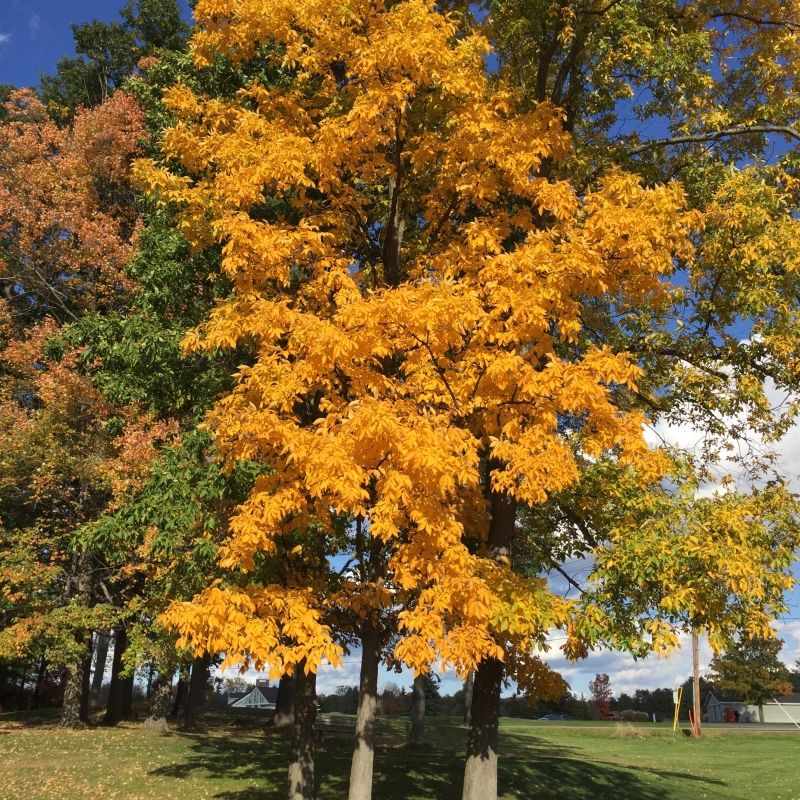
| Carya glabra |
Pignut Hickory |
50’ - 60’
open, oval |
|
no diseases |
P, M, B, L (131 species)
|
golden fall colour
deep tap root
transplanting difficult
|
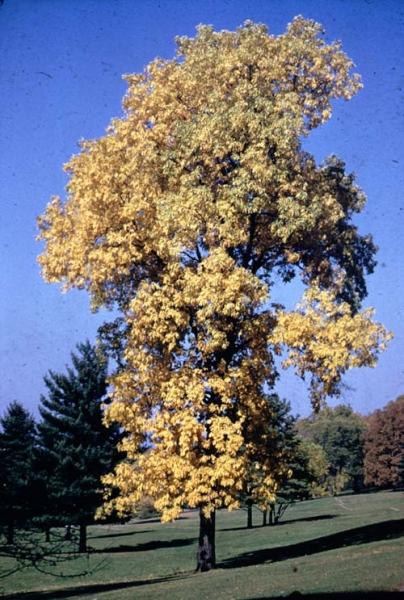
Carya ovata
|
Shagbark Hickory
|
60’ - 80’ oblong crown
|
|
no diseases
|
P, M, B, L (131 species)
|
rich yellow fall colour,
deep tap root makes transplanting difficult |
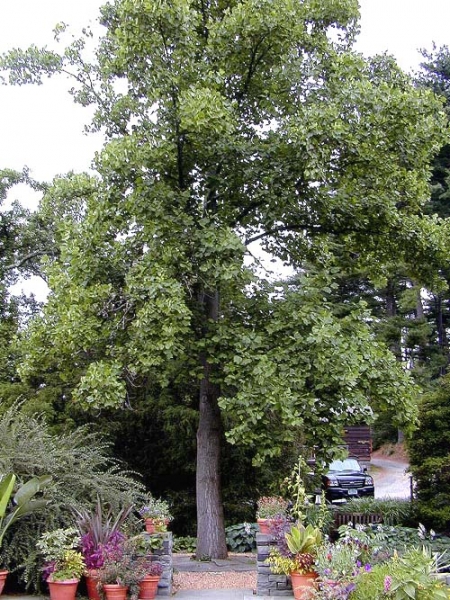
| Liriodendron
tulipifera |
Tuliptree |
80' - 120'
broad
pyramidal
|
|
relatively pest free |
P, M, B, L (21 species)
|
difficult to transplant,
transplant in spring; bare root transplanting
difficult
|
 The list below was compiled
by Laura Barry and members of the Committee, using professional
sources and with regard to the local climate zone and soils.
The list below was compiled
by Laura Barry and members of the Committee, using professional
sources and with regard to the local climate zone and soils.  to the name.